
Why Your Team Needs Psychological Safety (And How to Build It)
Google is famous for data. So when they spent two years studying 180 teams to find out what makes teams effective, everyone listened.
The answer was not smarter people. Not better processes. Not more resources.
It was psychological safety.
What is Psychological Safety?
Psychological safety is the belief that you will not be punished or humiliated for speaking up with ideas, questions, concerns, or mistakes.
It is the freedom to be vulnerable without fear.
Amy Edmondson, who coined the term at Harvard, describes it as a shared belief that the team is safe for interpersonal risk-taking.
In psychologically safe teams, people ask questions without looking ignorant. They propose ideas without looking stupid. They admit mistakes without looking incompetent. They challenge the boss without looking disloyal.
The Research: Project Aristotle
Google is Project Aristotle studied 180 teams over two years. They analyzed everything: org charts, team size, personality types, work schedules, you name it.
The single biggest predictor of team performance was psychological safety.
Not intelligence. Not experience. Not skills. Psychological safety.
Teams with high psychological safety were:
- More likely to harness the power of diverse ideas
- More likely to learn from mistakes
- More likely to take smart risks
- More productive and innovative
The Hidden Cost of Unsafe Teams
In teams without psychological safety, people:
- Stay silent when they have ideas or concerns
- Hide mistakes instead of learning from them
- Avoid asking questions that could prevent problems
- Wait to be told what to do instead of taking initiative
- Clock out at 5pm even when the team needs them
The math is simple: If your team has 10 people and each holds back just one idea per week, you are losing 520 ideas per year.
How to Build Psychological Safety
1. Model Vulnerability First
Leaders go first. Admit your mistakes publicly. Say I do not know when you do not know. Ask for feedback on your own behavior.
When the boss admits fallibility, everyone else feels permission to do the same.
2. Respond Well to Bad News
This is the test. When someone tells you something difficult, how do you react?
If you punish, blame, or become defensive, you are teaching people to stay silent.
If you thank them, listen, and focus on learning, you are building safety.
3. Create Explicit Permissions
Tell your team it is okay to:
- Disagree with you
- Question decisions
- Admit when something is not working
- Take calculated risks
- Say no
Sometimes people need explicit permission because the default in most organizations is silence.
4. Celebrate Learning from Failure
Do not just tolerate failure. Celebrate it when people learned something valuable.
When a project fails, the question is not Who is to blame? The question is What did we learn?
5. Check Your Reactions
Every time someone speaks up, notice your internal reaction. Do you judge? Dismiss? Become defensive?
If you want your team to speak up, your reactions need to invite more speaking, not less.
The Four Stages of Psychological Safety
Timothy R. Clark describes four stages:
- Stage 1: Inclusion Safety You feel accepted. You belong.
- Stage 2: Learner Safety You feel safe to learn, ask questions, and make mistakes.
- Stage 3: Contributor Safety You feel safe to contribute and make a difference.
- Stage 4: Challenger Safety You feel safe to challenge the status quo.
Most leaders focus on Stage 3. But you cannot skip stages. If people do not feel included, they will not learn. If they do not feel safe to learn, they will not contribute.
Signs Your Team Lacks Psychological Safety
- Meetings are dominated by a few voices
- The same people always agree with you
- Mistakes are hidden or blamed on others
- Nobody asks questions in meetings
- People leave the team and do not say why
- Your team is quiet in meetings but complains later
The Bottom Line
Psychological safety is not about being nice. It is not about avoiding accountability. It is not about lowering standards.
It is about creating the conditions where your team can do their best work.
The best leaders do not have all the answers. They create environments where everyone feels safe to find the answers together.
Want to build a high-performing team with strong psychological safety? Book a free consultation and discover how leadership coaching can help you create these conditions.
Noam Gamady
Certified Feldenkrais Practitioner, Reiki Master, and NVC trainer with 15+ years helping executives lead from the body, not just the mind. Based in New York City.
You Might Also Like
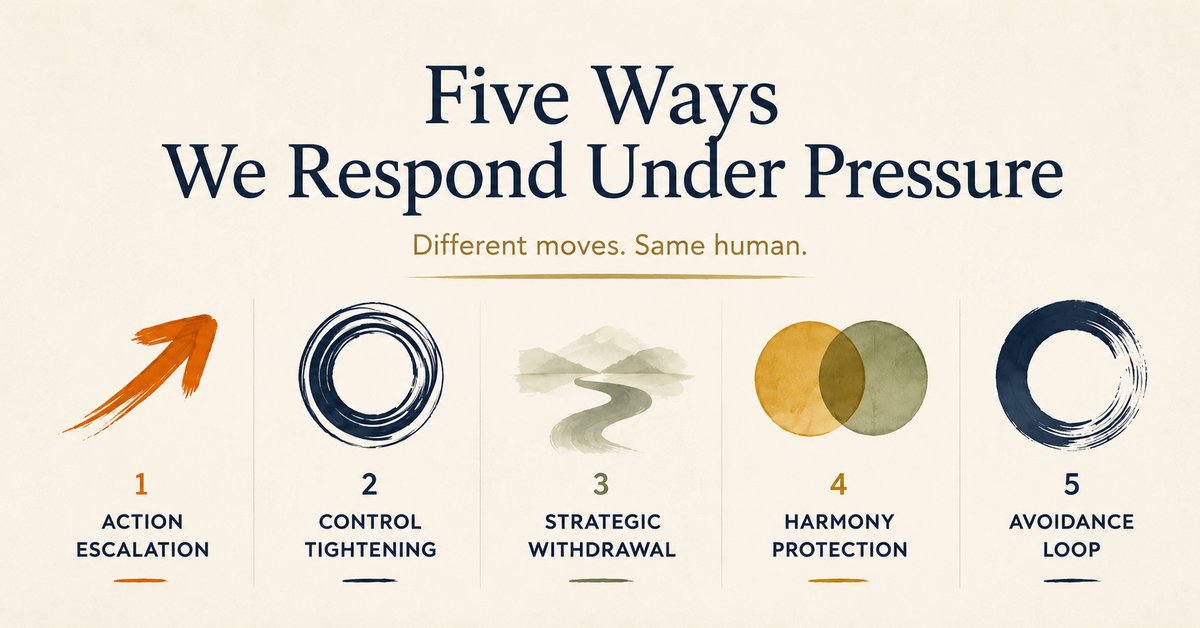
Five Ways We Respond Under Pressure
Under pressure, useful capacities can start doing too much work. Five pressure patterns describe what becomes more available — and what can become harder to reach.

When the Doing Becomes the Problem
How pressure quietly pulls leaders out of leadership and back into the work Bruce knew the Q3 deliverable was slipping. He could feel it, not in the data yet, but in the way his mornings were filling

Emotional Intelligence in Leadership: The Secret to Building High-Performance Teams
Discover how emotional intelligence in leadership builds stronger teams, improves communication, and drives motivation. Expert insights from a certified somatic coach in NYC.